






Types of Silk in India: A Complete Guide to Indian Silk Varieties
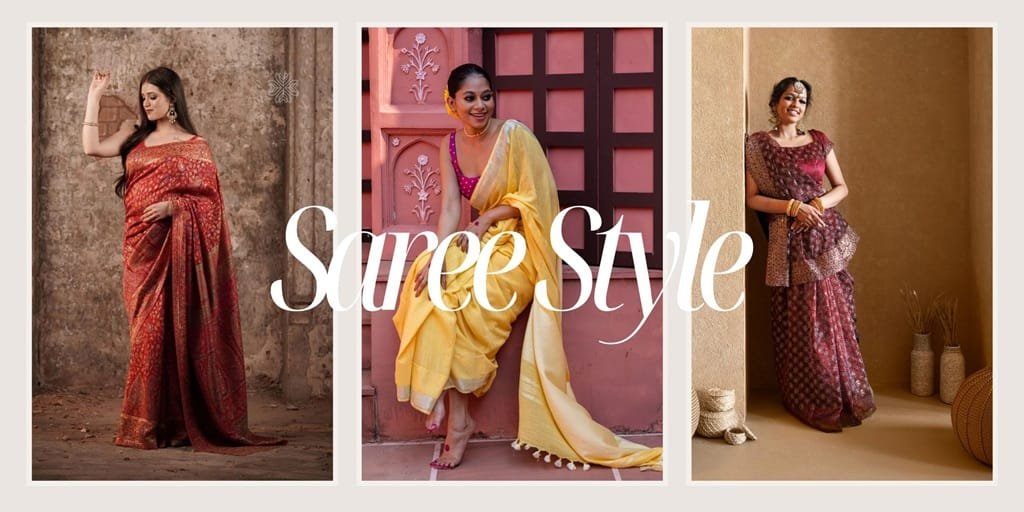
India and silk have a relationship that goes far beyond fashion. For centuries, silk has been woven into wedding traditions, festivals, royal wardrobes and family heirlooms. What makes Indian silk particularly fascinating is that there isn’t just one kind of silk.
From the smooth, lustrous feel of Mulberry silk to the earthy texture of Tussar, the natural golden glow of Muga silk and the soft warmth of Eri silk, India’s silk traditions are remarkably diverse.
And then there are the famous regional silk sarees—Banarasi, Kanchipuram, Baluchari, Paithani, Mysore and Chanderi, among many others. Some names describe the type of silk, while others describe a particular weaving tradition or the region where the textile developed.
So, what are the different types of silk in India? Which silk is the softest? Which is best for weddings? And how is Mulberry silk different from Tussar or Muga?
Let’s explore the world of Indian silk, one variety at a time.
What Are the Main Types of Silk in India?
Indian silk is broadly divided into Mulberry silk and non-mulberry silk.
The four major silk varieties associated with Indian sericulture are:
- Mulberry silk
- Tussar silk
- Eri silk
- Muga silk
Among these, Mulberry is the most widely produced commercial silk, while Tussar, Eri and Muga are generally grouped under non-mulberry or wild silks.
India’s regional textile traditions then transform these fibres into distinctive fabrics and sarees through different weaving techniques.
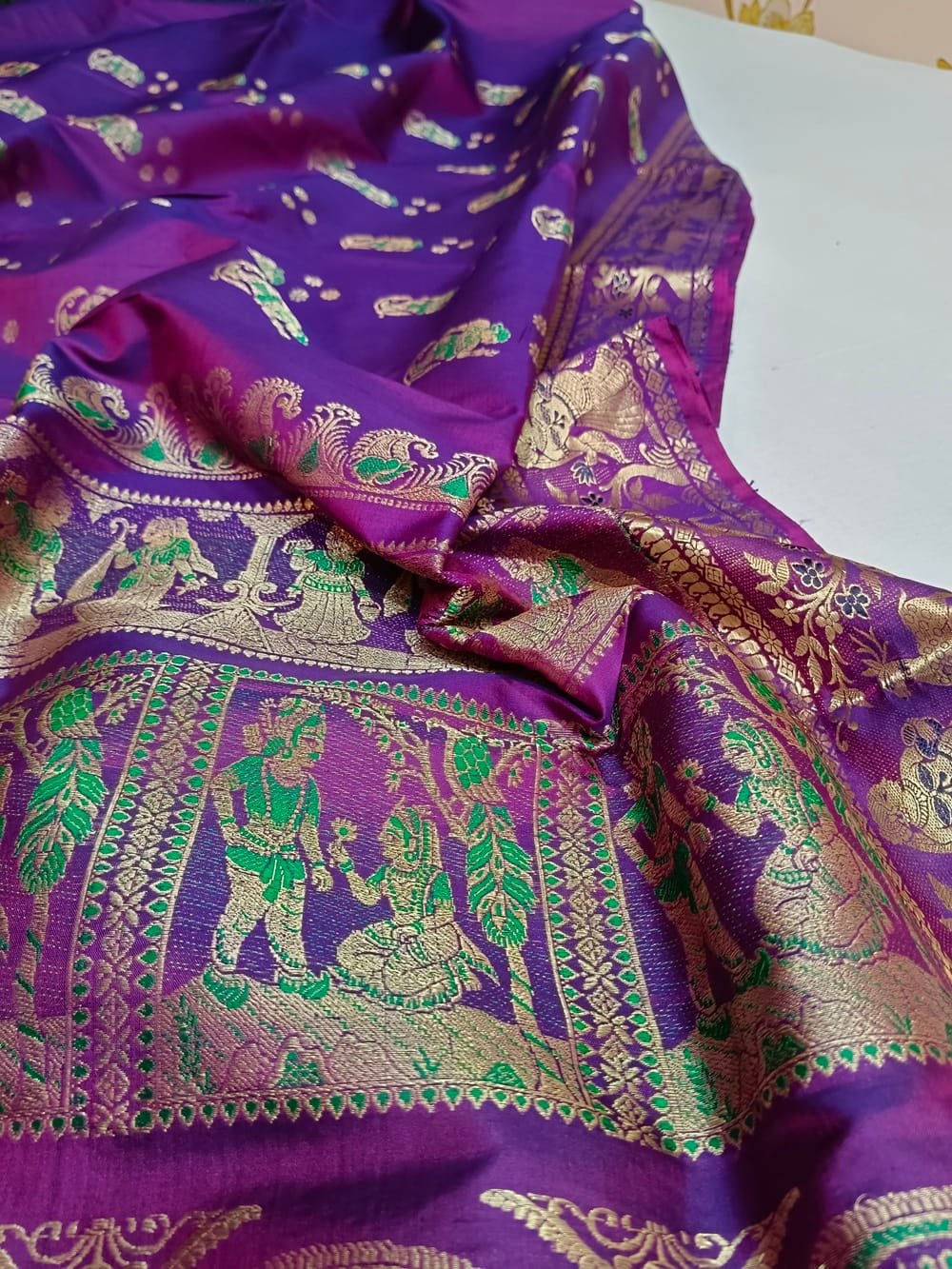
For example, Baluchari sarees from Bankura, West Bengal, are traditionally made using Tussar silk and are famous for their intricate mythological scenes woven into the pallu.
That distinction is important: silk fibre and silk saree are not always the same thing.
1. Mulberry Silk
When people think of smooth, luxurious silk, Mulberry silk is often the first variety that comes to mind.
Mulberry silk is produced by silkworms that primarily feed on mulberry leaves. The fibre is known for its smooth surface, natural lustre and relatively uniform appearance.
Because of its softness and strength, Mulberry silk is widely used for premium clothing, sarees, scarves, dresses and other luxury textiles.
What makes Mulberry silk special?
- Smooth and soft texture
- Elegant natural shine
- Fine and relatively uniform fibres
- Comfortable against the skin
- Suitable for luxurious sarees and garments
- Available in a wide range of colours and weaves
Some of India’s most celebrated silk traditions use Mulberry silk. Kanchipuram silk sarees, for example, are traditionally associated with Mulberry silk and are famous for their rich colours, strong structure and elaborate borders.
For someone looking for a traditional wedding saree with a rich and structured appearance, Mulberry-based silk is often an excellent choice.
2. Tussar Silk
Tussar silk, also written as Tasar or Tassar, has a personality completely different from smooth Mulberry silk.
It is known for its distinctive texture, natural sheen and slightly earthy appearance. The fabric often has a beautiful irregularity that makes each handwoven piece feel individual.
Tussar has a particularly strong connection with eastern and central India, including West Bengal, Jharkhand, Odisha and Chhattisgarh.
Why do people love Tussar silk?
Tussar has a more natural and understated beauty. Instead of looking extremely glossy, it often has a warm, textured appearance.
It is especially popular for:
- Handloom sarees
- Festive wear
- Office and formal sarees
- Traditional Bengali sarees
- Hand-painted and printed sarees
- Designer ethnic clothing
One of the best-known examples is the Baluchari saree of West Bengal, where Tussar silk is used to create elaborate woven designs featuring stories and characters from Indian mythology. The Government of India’s National Portal identifies Baluchari as a GI-tagged handloom silk tradition from Bankura.
If Mulberry silk feels polished and luxurious, Tussar often feels artistic, earthy and distinctly Indian.
3. Eri Silk
Eri silk is another important Indian silk variety, particularly associated with Assam and parts of northeastern India.
It is sometimes called Ahimsa silk because of production practices in which the silk is obtained without necessarily killing the silkworm. However, the term “Ahimsa silk” can refer to specific production methods rather than automatically describing every Eri product, so buyers should check how a particular fabric has been produced.
Eri silk is known for its soft texture, warmth and durability. The National Portal of India notes that Eri silk from Assam is used for garments including shawls, scarves, sarees and kurtas.
Eri silk is ideal for people who prefer:
- Soft, comfortable fabrics
- A slightly textured appearance
- Warm and cosy textiles
- Natural-looking handloom fabrics
- Traditional northeastern Indian textiles
Unlike highly glossy silk, Eri has a more subdued appearance. That makes it particularly appealing for people who want silk that looks elegant without being excessively shiny.
4. Muga Silk
If there is one Indian silk famous for its naturally golden appearance, it is Muga silk.
Muga silk is strongly associated with Assam and is often described as one of India’s most distinctive silk traditions. Its naturally yellowish-golden colour and glossy appearance give it a regal character.
The National Portal of India describes Muga silk as a wild silk with a natural yellowish-golden tint and shimmering texture.
One of its most interesting characteristics is that its appearance can become richer with age and use.
Muga silk is traditionally used for Assamese garments, sarees, mekhela chadors and other special-occasion clothing.
Why is Muga silk expensive?
Muga silk is relatively distinctive and geographically associated with Assam. Its natural golden colour, durability and traditional production contribute to its premium positioning.
For someone building an heirloom collection, Muga can be an especially interesting choice.
5. Banarasi Silk
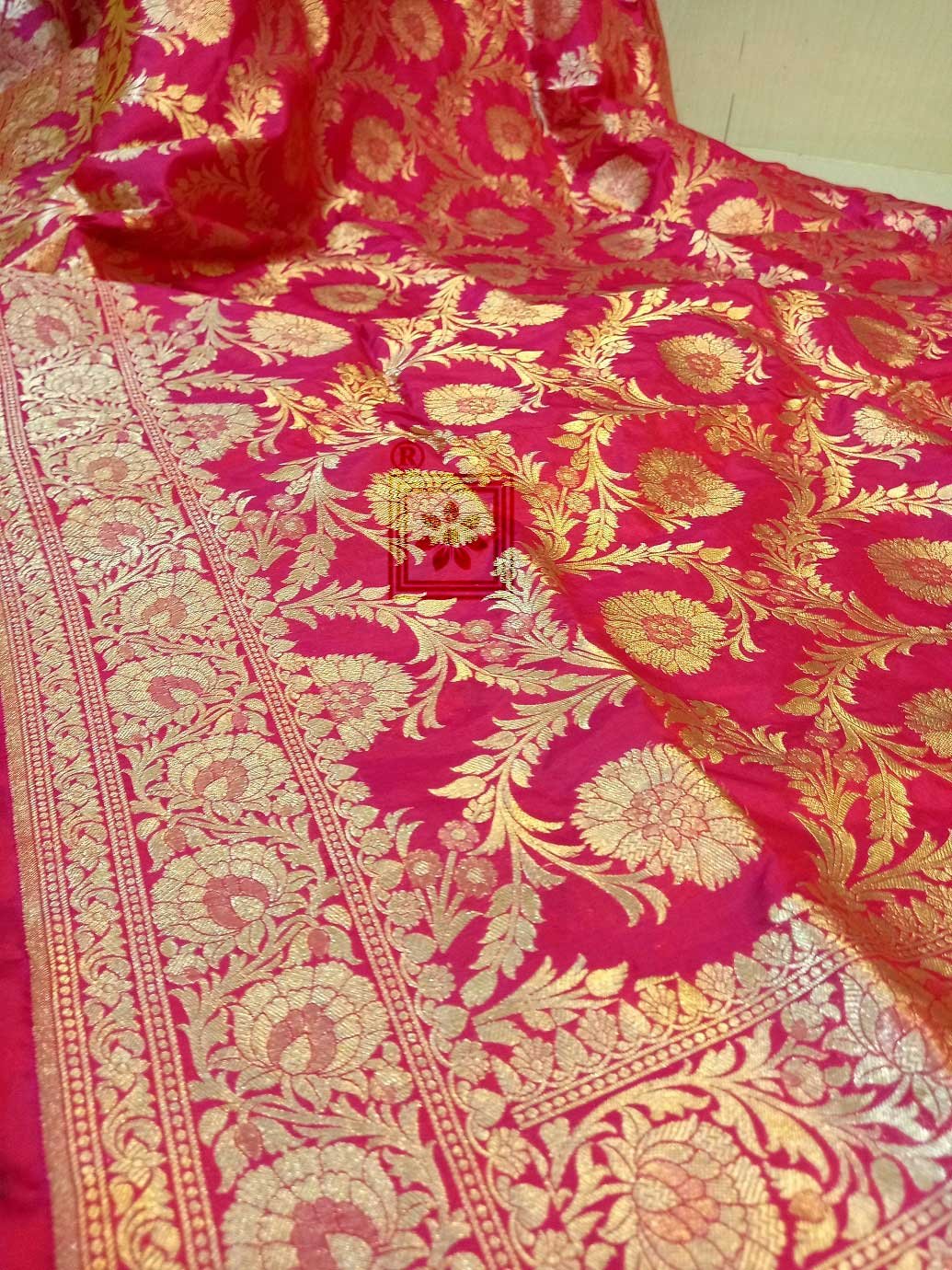
Banarasi silk is not simply another type of raw silk—it represents an extraordinary weaving tradition from Varanasi, Uttar Pradesh.
Banarasi sarees are famous for intricate motifs, luxurious surfaces and zari work. Floral patterns, buttas, jaal designs and elaborate pallus are among the features associated with the tradition.
Banarasi sarees are particularly popular for:
- Bridal wear
- Wedding receptions
- Festivals
- Traditional ceremonies
- Luxury saree collections
The appeal of Banarasi lies not only in the silk itself but in the craftsmanship used to transform it into a richly patterned textile.
This is why two silk sarees can feel completely different even when both are made from high-quality silk: the weave, yarn, zari, finishing and craftsmanship matter enormously.
6. Kanchipuram Silk
Kanchipuram silk, also known as Kanjivaram silk, comes from Kanchipuram in Tamil Nadu.
It is one of India’s most recognisable wedding saree traditions.
Kanchipuram sarees are known for:
- Rich colours
- Strong and substantial fabric
- Contrasting borders
- Temple-inspired motifs
- Traditional zari work
- Long-lasting construction
The tradition is closely associated with Mulberry silk. Kanchipuram’s distinctive visual language often includes temple borders, peacocks, checks, stripes and traditional motifs.
For brides who want a saree that feels grand, traditional and substantial, Kanchipuram remains one of the most popular choices.
7. Baluchari Silk
Baluchari is one of India’s most artistic silk traditions.
Originating in West Bengal, particularly around Bishnupur and Bankura, Baluchari sarees are recognised for elaborate woven scenes.
Instead of relying only on floral motifs or geometric patterns, traditional Baluchari designs can depict episodes inspired by the Ramayana, Mahabharata and other aspects of Indian cultural history.
The pallu becomes almost like a canvas.
This makes Baluchari particularly attractive to buyers who appreciate storytelling, heritage and handloom craftsmanship rather than simply looking for a shiny silk saree.
8. Paithani Silk
Paithani is a celebrated silk weaving tradition from Maharashtra.
It is especially famous for its vibrant colours and traditional motifs, including peacocks, parrots and lotus-inspired designs.
Paithani has a long history and remains closely associated with Maharashtrian culture and ceremonial clothing.
One of its most distinctive characteristics is the combination of colourful silk weaving and zari work. Traditional Paithani sarees can take considerable time and skill to create, particularly when the design is highly intricate.
9. Mysore Silk
Mysore silk comes from Karnataka and is known for its smooth texture, understated elegance and beautiful lustre.
Compared with heavily decorated Banarasi or Kanchipuram sarees, Mysore silk often has a cleaner and more refined appearance.
It works beautifully for women who prefer:
- Minimal designs
- Elegant solid colours
- Lightweight luxury
- Formal occasions
- Comfortable everyday silk
A simple Mysore silk saree can look remarkably sophisticated with minimal jewellery.
10. Chanderi Silk
Chanderi is associated with Madhya Pradesh and is famous for its lightweight, delicate appearance.
Unlike heavy bridal silks, Chanderi fabrics are appreciated for their airy feel and subtle elegance. Silk is often combined with cotton in Chanderi textiles, creating fabrics that are light and comfortable.
Chanderi is particularly suitable for:
- Daytime functions
- Summer occasions
- Office wear
- Festive gatherings
- Women who prefer lightweight sarees
Its delicate transparency, subtle shine and fine texture give it a very different personality from heavy wedding silks.
11. Uppada Silk
Uppada silk comes from Andhra Pradesh and is known for its lightweight texture and elegant weaving.
Uppada sarees are often recognised for their fine fabric, zari details and sophisticated appearance.
They are an excellent option for someone who wants the luxurious appearance of silk without the substantial weight associated with some traditional wedding silks.
12. Pochampally Silk
Pochampally is particularly famous for Ikat weaving.
Unlike a conventional printed pattern, Ikat designs are created by resist-dyeing yarns before weaving them into fabric. This creates distinctive geometric patterns.
Pochampally silk sarees therefore have a very different visual identity from Banarasi or Kanchipuram sarees.
They are ideal for buyers who want traditional Indian craftsmanship with a more geometric and contemporary appearance.
Silk Types in India: Quick Comparison
| Silk variety | Main region | Texture | Best known for |
|---|---|---|---|
| Mulberry Silk | Several regions | Smooth, soft | Luxury silk |
| Tussar Silk | Eastern & Central India | Textured, earthy | Handloom sarees |
| Eri Silk | Assam & Northeast | Soft, warm | Natural-looking textiles |
| Muga Silk | Assam | Golden, glossy | Natural golden colour |
| Banarasi Silk | Varanasi | Rich, luxurious | Zari and elaborate motifs |
| Kanchipuram Silk | Tamil Nadu | Rich, structured | Bridal sarees |
| Baluchari | West Bengal | Fine, artistic | Mythological motifs |
| Paithani | Maharashtra | Rich, colourful | Peacock and traditional motifs |
| Mysore Silk | Karnataka | Smooth, elegant | Minimal luxury |
| Chanderi | Madhya Pradesh | Lightweight | Fine, airy sarees |
| Uppada Silk | Andhra Pradesh | Lightweight | Fine weaving and zari |
| Pochampally Silk | Telangana | Textured | Ikat patterns |
Which Type of Silk Is Best?
There is no single answer because the “best” silk depends on what you want.
Best silk for weddings
Kanchipuram and Banarasi silk are excellent choices for grand wedding occasions.
Best silk for a natural, earthy look
Tussar silk is a beautiful option because of its distinctive texture and subdued lustre.
Best silk for a lightweight saree
Mysore, Uppada and Chanderi can be excellent choices depending on the exact fabric and weave.
Best silk for something unique
Muga and Baluchari stand out because of their distinctive regional identity.
Best silk for heirloom collections
High-quality Kanchipuram, Banarasi, Muga, Paithani and Baluchari sarees can all be meaningful additions to an heirloom wardrobe when authentic and well made.
How to Choose the Right Indian Silk Saree
Don’t choose a silk saree only because the name sounds premium.
Before buying, consider five things:
1. Fabric composition:
Check whether the saree is pure silk, silk blend or silk-cotton.
2. Weaving technique:
A handwoven saree can have a completely different character from a machine-produced imitation.
3. Zari:
If the saree has zari, ask about its composition and authenticity.
4. Occasion:
A heavy bridal silk may not be the most comfortable option for an afternoon event.
5. Care requirements:
Silk needs proper storage and maintenance. Avoid exposing it unnecessarily to moisture, harsh chemicals or prolonged direct sunlight.
When buying expensive silk, certifications and reliable sourcing can also provide greater confidence.
Why Indian Silk Is Still So Special
Indian silk is not merely a fabric.
It carries geography, craftsmanship, history and identity.
A Banarasi saree tells a different story from a Kanchipuram. A Tussar saree feels different from Muga. A Baluchari pallu can turn a saree into a piece of visual storytelling.
That diversity is what makes Indian silk so fascinating.
The next time you see a silk saree, look beyond its colour and shine. Ask where the silk came from, where it was woven, what technique was used and what story the motifs tell.
Because once you understand the different types of silk in India, choosing a saree becomes much more than shopping—it becomes a way of appreciating India’s living textile heritage.
Frequently Asked Questions About Types of Silk in India
How many types of silk are there in India?
India has four major silk varieties commonly recognised in sericulture: Mulberry, Tussar, Eri and Muga. Numerous regional silk textiles and saree traditions are then created from these and other silk fibres through distinctive weaving techniques.
Which is the most popular silk in India?
Mulberry silk is one of the most widely used commercial silk varieties in India. Among silk saree traditions, Banarasi and Kanchipuram are particularly well known across the country.
Which is better, Tussar or Mulberry silk?
It depends on personal preference. Mulberry silk is generally smoother and more lustrous, while Tussar has a distinctive textured and earthy appearance. Choose Mulberry for a polished luxury look and Tussar for a more natural handloom aesthetic.
Which silk is famous for its golden colour?
Muga silk from Assam is particularly famous for its naturally yellowish-golden colour and glossy appearance.
Which silk saree is best for a wedding?
Kanchipuram and Banarasi silk sarees are among the most popular wedding choices. However, Baluchari, Paithani, Muga and other regional silks can also make exceptional wedding sarees depending on the style and occasion.
Is Tussar silk pure silk?
Tussar is a genuine silk fibre, but individual products sold as “Tussar” may differ in composition. Buyers should always check the product’s fibre composition rather than assuming that every fabric labelled Tussar is 100% silk.
Which Indian silk is lightweight?
Mysore, Uppada and Chanderi textiles are generally associated with lighter, more comfortable drapes, although the actual weight depends on the specific yarn, weave and design.
Final Thoughts
India’s silk heritage is incredibly diverse. From the smooth luxury of Mulberry silk and earthy character of Tussar to the golden glow of Muga and softness of Eri, every variety has its own identity.
Then come the regional masterpieces—Banarasi, Kanchipuram, Baluchari, Paithani, Mysore, Chanderi, Uppada and Pochampally—each showing how Indian weavers have transformed silk into distinctive works of art.
So, whether you are buying your first silk saree or building an heirloom collection, understanding the types of silk in India helps you make a more informed choice.
And perhaps that is the most beautiful thing about Indian silk: there is always another weave, another region and another story waiting to be discovered.