






Best Handloom Sarees in India
India’s handloom sarees are far more than beautiful garments—they are living pieces of history, culture, and craftsmanship. Every region of the country has developed its own weaving style over centuries, creating sarees that tell stories through their motifs, colors, and techniques.
Today, as sustainable fashion gains popularity, handloom sarees have become even more valuable. Unlike machine-made fabrics, every authentic handloom saree is woven patiently by skilled artisans, often taking days or even months to complete. The result is a masterpiece that combines elegance, durability, and heritage.
Whether you’re shopping for your wedding, festive celebrations, office wear, or building a timeless wardrobe, this guide explores the best handloom sarees in India, their unique characteristics, and how to choose the perfect one.
Why Handloom Sarees Are Special
Handloom sarees are woven manually on traditional looms without automated machinery. This human craftsmanship gives each saree slight variations that make every piece unique.
Some of the biggest reasons women prefer handloom sarees include:
- Superior craftsmanship
- Exceptional durability
- Breathable natural fabrics
- Rich cultural heritage
- Eco-friendly production
- Excellent long-term value
- Supports Indian artisans
Unlike mass-produced textiles, a genuine handloom saree carries the signature of the artisan’s skill and generations of weaving tradition.
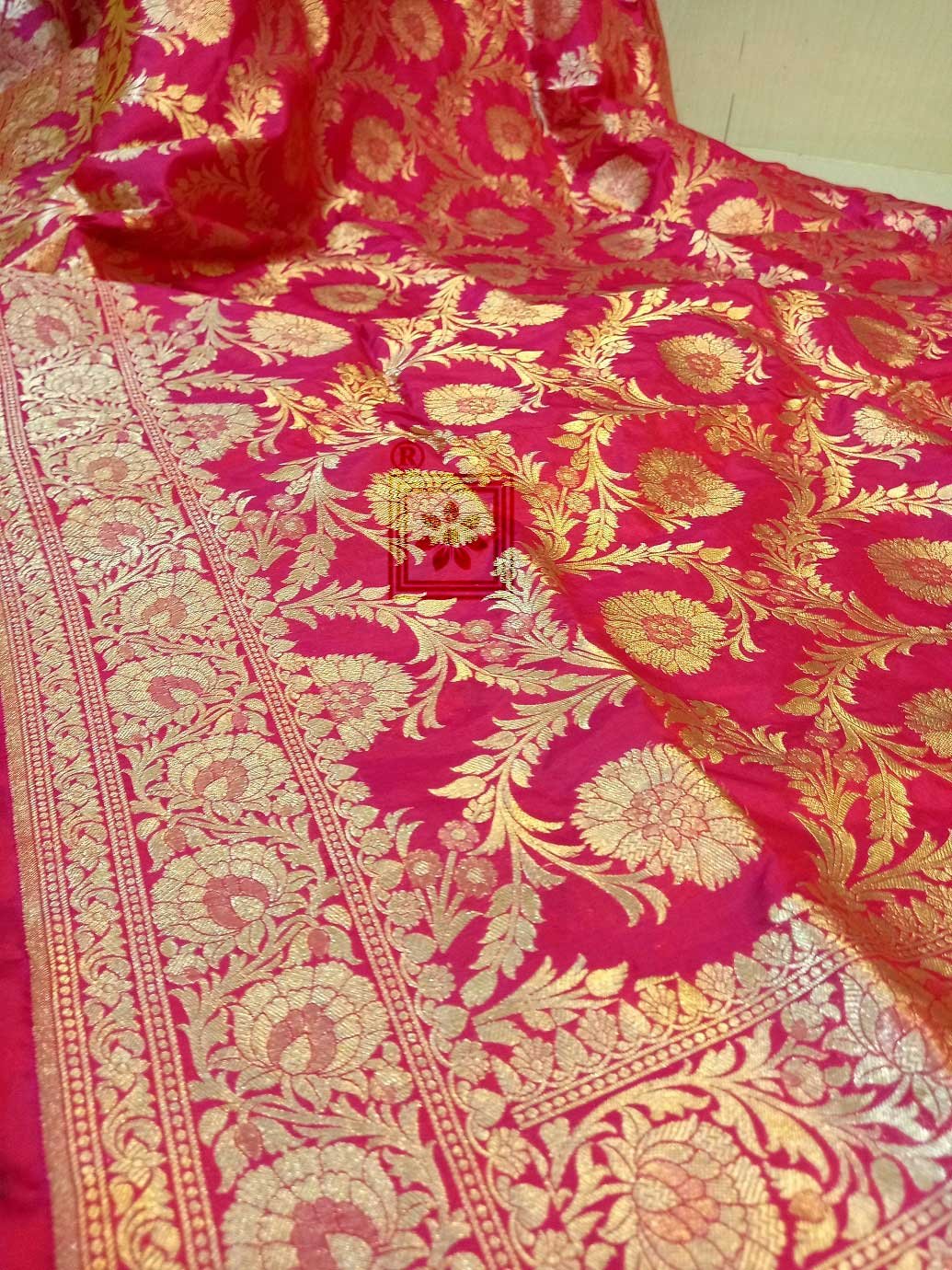
1. Banarasi Handloom Saree
One of India’s most luxurious sarees, Banarasi silk is woven in Varanasi using intricate gold and silver zari work.
Perfect for:
- Weddings
- Reception
- Bridal trousseau
- Festivals
Popular motifs include:
- Floral vines
- Paisleys
- Mughal-inspired designs
- Jangla patterns
A pure handloom Banarasi saree often becomes a family heirloom.
2. Kanjeevaram Silk Saree
Originating from Tamil Nadu, Kanjeevaram sarees are known for their rich mulberry silk and contrasting borders.
They are famous for:
- Temple borders
- Heavy zari
- Vibrant colours
- Incredible durability
A genuine Kanjeevaram can last for generations with proper care.
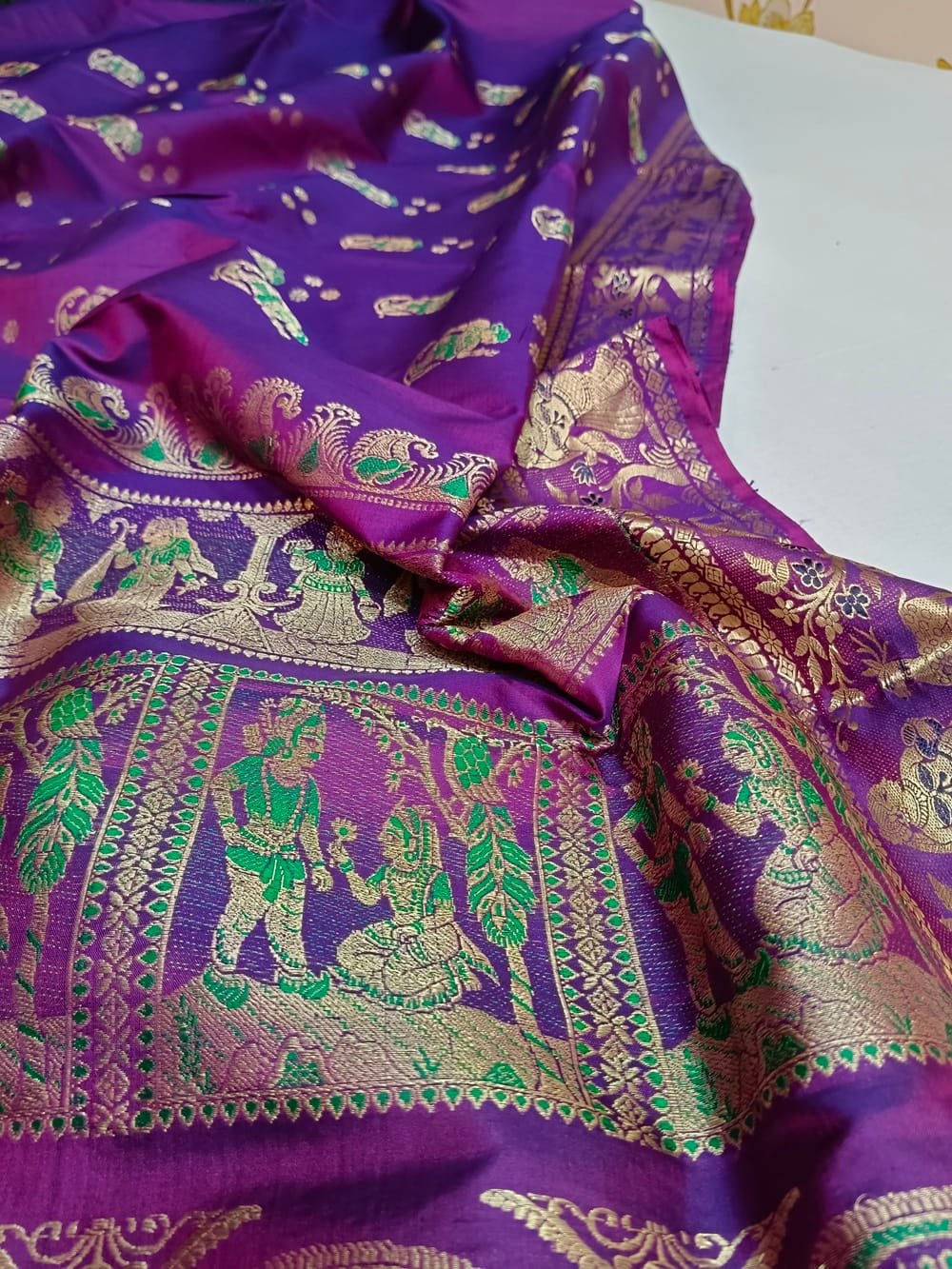
3. Baluchari Saree
Woven in Bishnupur, West Bengal, Baluchari sarees are famous for storytelling through silk.
The pallu often depicts:
- Mythological scenes
- Royal processions
- Krishna Leela
- Historical narratives
These sarees are ideal for collectors and women who appreciate artistic craftsmanship.
4. Swarnachari Saree
Swarnachari is considered the luxurious cousin of Baluchari.
Distinctive features include:
- Gold zari weaving
- Intricate storytelling
- Rich silk texture
- Grand festive appearance
These are among the finest heritage sarees from Bengal.
5. Tussar Silk Saree
Known for its natural golden sheen, Tussar silk offers understated luxury.
Popular styles include:
- Madhubani painting
- Kantha embroidery
- Ajrakh print
- Hand block printing
Its lightweight texture makes it suitable for both office wear and festive occasions.
6. Sambalpuri Ikat Saree
From Odisha, Sambalpuri sarees are admired for their complex Ikat dyeing technique where threads are dyed before weaving.
Common motifs include:
- Shankha
- Chakra
- Flowers
- Conch
- Temple designs
Every design appears identical on both sides of the fabric.
7. Paithani Saree
Maharashtra’s pride, Paithani sarees feature handwoven peacock motifs and rich silk.
Ideal for:
- Weddings
- Maharashtrian ceremonies
- Grand celebrations
These sarees often require months to weave.
8. Chanderi Saree
Chanderi combines silk and cotton beautifully.
Women love Chanderi because it is:
- Lightweight
- Elegant
- Comfortable
- Office-friendly
Its translucent texture creates a graceful appearance.
9. Maheshwari Saree
Originating from Madhya Pradesh, Maheshwari sarees are celebrated for their reversible borders and elegant stripes.
Suitable for:
- Office
- Daily wear
- Festivals
- Summer weddings
10. Kota Doria Saree
Recognizable by its square check pattern (Khats), Kota Doria is among India’s lightest sarees.
Perfect during summer due to its breathable weave.
11. Gadwal Saree
Gadwal sarees combine cotton bodies with luxurious silk borders.
This unique combination offers:
- Comfortable drape
- Festive appearance
- Lightweight feel
12. Muga Silk Saree
Produced exclusively in Assam, Muga silk naturally shines with a golden hue.
Remarkably:
- Gets shinier over time
- Extremely durable
- Highly valuable
13. Patola Saree
Double Ikat Patola from Gujarat is among India’s most expensive handloom sarees.
Each saree can require several months—or even a year—to complete due to its complex weaving process.
14. Jamdani Saree
Jamdani weaving creates delicate floating motifs directly on the loom.
Popular among women who appreciate minimal yet luxurious fashion.
15. Dhakai Jamdani
Ultra-lightweight and airy, Dhakai Jamdani is known for intricate floral motifs and soft drapes, making it perfect for elegant occasions.
16. Pochampally Ikat
Telangana’s Pochampally sarees are famous for their geometric Ikat designs and vibrant colour combinations.
17. Bengal Cotton Handloom Saree
Simple, breathable, and timeless, Bengal cotton sarees remain a favorite for everyday elegance and cultural events.
18. Bishnupuri Silk Saree
Bishnupuri silk is celebrated for its soft texture, lightweight feel, and elegant woven patterns. It offers understated luxury for festivals, office events, and family gatherings.
How to Identify an Authentic Handloom Saree
Unfortunately, machine-made replicas are widely available. Look for these indicators:
✔ Silk Mark Certification
For pure silk sarees, always check for the Silk Mark label.
✔ Handloom Mark
Issued to certify genuine handloom products.
✔ Slight Irregularities
Minor variations indicate handmade craftsmanship.
✔ Natural Texture
Machine-made fabrics often feel overly smooth and uniform.
✔ Buy from Trusted Sellers
Choose reputable handloom stores with transparent product details and artisan sourcing.
Which Handloom Saree is Best for Different Occasions?
| Occasion | Best Choice |
|---|---|
| Wedding | Banarasi, Kanjeevaram, Paithani |
| Reception | Swarnachari, Baluchari |
| Office | Chanderi, Maheshwari, Tussar |
| Festivals | Sambalpuri, Gadwal, Bishnupuri |
| Summer | Kota Doria, Bengal Cotton |
| Luxury Collection | Patola, Muga Silk |
Styling Tips
To make your handloom saree stand out:
- Pair with handcrafted silver jewellery for cotton weaves.
- Wear temple jewellery with silk sarees.
- Choose minimal makeup for intricate woven designs.
- Experiment with contemporary blouses.
- Finish with a classic bun or soft curls.
Caring for Handloom Sarees
Proper care ensures your sarees last for decades.
- Dry clean pure silk sarees.
- Store folded inside breathable cotton bags.
- Refold every few months to avoid permanent creases.
- Keep away from direct sunlight.
- Never spray perfume directly on silk.
- Use neem leaves or cedar blocks to protect from insects.
Why Investing in Handloom Matters
Buying handloom is more than purchasing clothing—it supports thousands of artisan families across India. Every saree represents hours of skilled craftsmanship, helping preserve centuries-old weaving traditions while promoting sustainable fashion.
Unlike fast fashion, handloom sarees become cherished heirlooms that can be worn and passed down through generations.
Frequently Asked Questions
Which is the best handloom saree in India?
There is no single best option. Banarasi, Kanjeevaram, Baluchari, Sambalpuri, Patola, and Paithani are among the most celebrated handloom sarees, each known for its unique weaving tradition.
How can I identify a genuine handloom saree?
Check for Handloom Mark or Silk Mark certification, examine the weave for slight natural irregularities, and buy from trusted sellers.
Are handloom sarees expensive?
Prices vary depending on fabric, weaving complexity, and craftsmanship. Cotton handloom sarees can start at affordable prices, while intricate silk weaves like Patola or Banarasi can cost significantly more due to the time involved.
Which handloom saree is best for weddings?
Banarasi, Kanjeevaram, Swarnachari, Paithani, and Patola are among the most popular choices for weddings and bridal wear.
Why are handloom sarees considered sustainable?
They are woven manually with lower energy consumption, often use natural fibres, and help sustain traditional artisan communities.
Final Thoughts
The beauty of India’s handloom heritage lies in its incredible diversity. From the regal elegance of Banarasi silk to the artistic storytelling of Baluchari, the airy comfort of Kota Doria, and the timeless charm of Sambalpuri Ikat, every weave reflects the culture and craftsmanship of its region.
Choosing a handloom saree is not just about style—it is about preserving traditions, supporting skilled artisans, and investing in garments that retain their beauty for years. Whether you’re shopping for a wedding, a festival, or everyday elegance, an authentic handloom saree is a timeless addition to any wardrobe.