






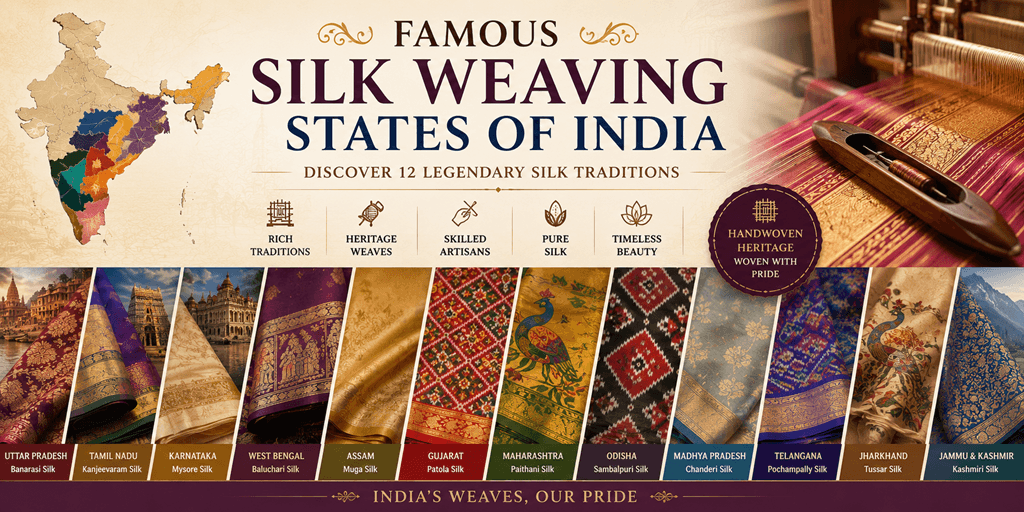
India has been the heart of silk weaving for over two thousand years. Across its diverse regions, skilled artisans have transformed fine silk threads into magnificent sarees, fabrics, and heirlooms that are admired worldwide.
Every silk weaving state has its own story. Some are known for rich gold zari, others for intricate handloom techniques, while a few produce naturally golden silk found nowhere else on Earth.
Whether you’re shopping for a bridal saree, building a luxury wardrobe, or simply fascinated by India’s textile heritage, understanding the country’s famous silk weaving states helps you appreciate the artistry behind every woven masterpiece.
In this comprehensive guide, we’ll explore the most celebrated and Famous Silk Weaving States of India, their signature sarees, weaving techniques, and what makes each tradition unique.
India’s Rich Silk Heritage
India is one of the world’s largest producers of natural silk and the only country that commercially produces all four major varieties:
- Mulberry Silk
- Tussar Silk
- Muga Silk
- Eri Silk
These silks are woven into exquisite fabrics by artisan communities whose knowledge has been passed down for generations.
Today, Indian silk is exported worldwide and continues to represent luxury, craftsmanship, and cultural heritage.
1. Uttar Pradesh – The Home of Banarasi Silk
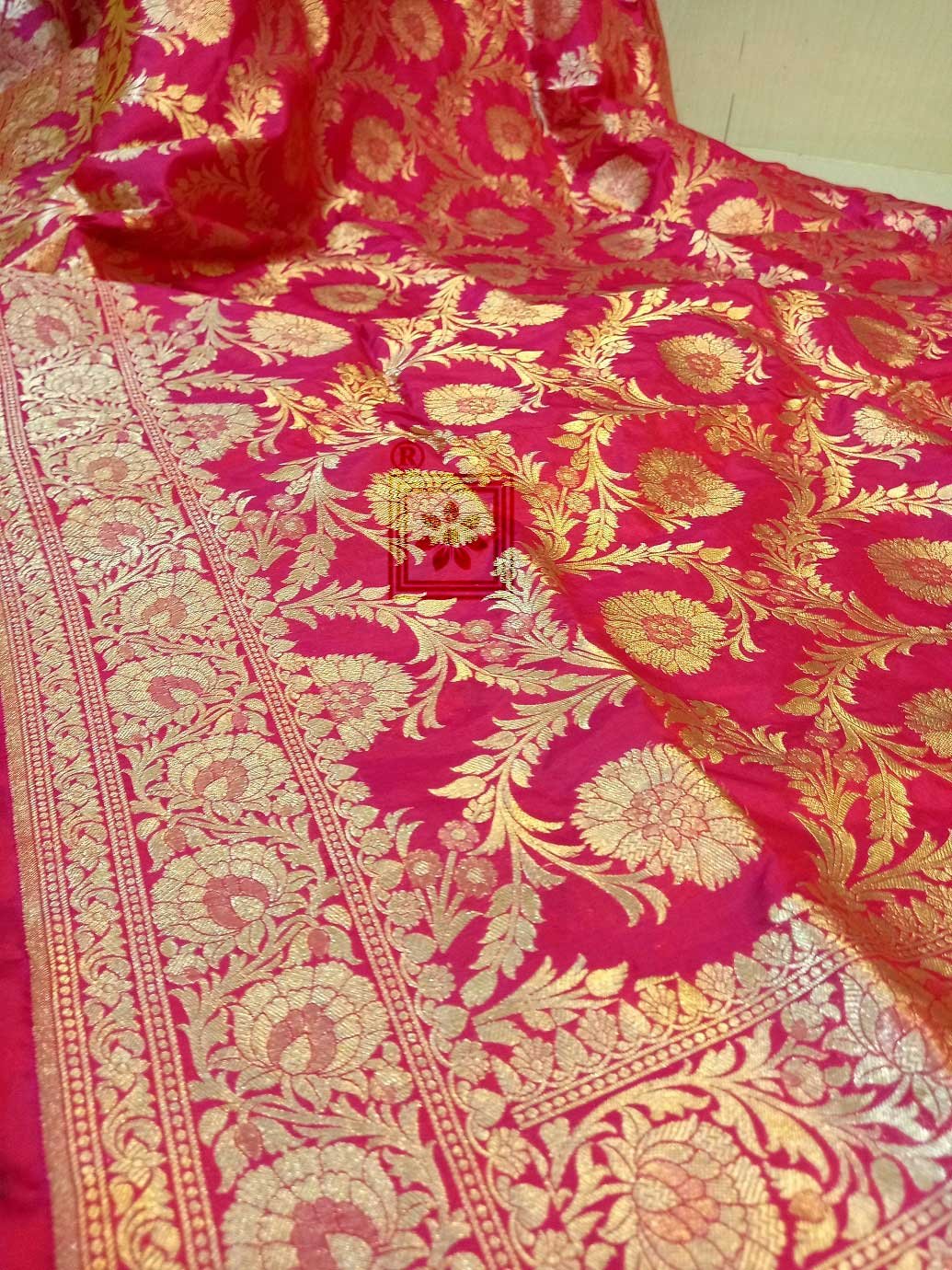
Perhaps the most famous silk weaving state in India is Uttar Pradesh, particularly the ancient city of Varanasi.
Banarasi silk sarees are admired for:
- Rich gold zari
- Mughal floral motifs
- Jangla designs
- Heavy bridal patterns
- Luxurious silk texture
A genuine Banarasi saree can take several weeks—or even months—to complete, making it one of India’s finest heirloom textiles.
Ideal for:
- Weddings
- Bridal wear
- Grand festivals
2. Tamil Nadu – Kanchipuram Silk Capital
Kanchipuram has earned global recognition for producing some of India’s strongest and most luxurious silk sarees.
Distinctive features include:
- Pure mulberry silk
- Contrasting borders
- Temple-inspired motifs
- Heavy zari work
- Exceptional durability
Many families preserve Kanjeevaram sarees for generations due to their timeless appeal.
3. Karnataka – Mysore Silk Excellence
Karnataka is one of the Famous Silk Weaving States of India, and synonymous with elegant Mysore Silk.
Unlike heavily brocaded sarees, Mysore silk focuses on understated luxury.
Popular characteristics include:
- Smooth finish
- Lightweight drape
- Pure silk texture
- Minimalistic zari borders
The state also plays a crucial role in India’s mulberry silk production.
4. West Bengal – Land of Artistic Silk Weaving
West Bengal boasts one of India’s richest weaving traditions.
Its famous silk sarees include:
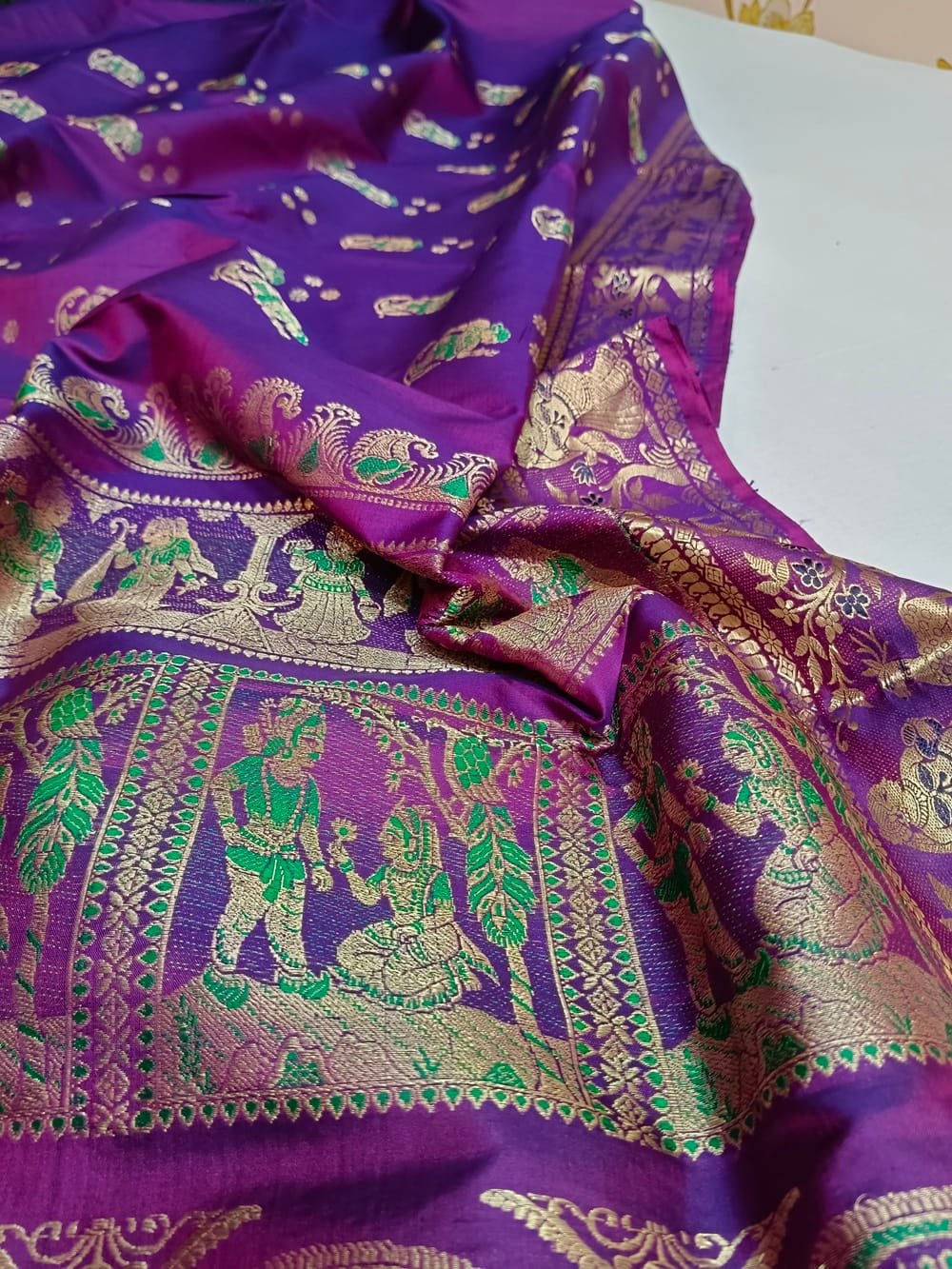
Baluchari
Known for storytelling through woven mythological scenes.
Swarnachari
An evolution of Baluchari featuring intricate gold zari work and elaborate pallu designs.
Bishnupuri Silk
Loved for its lightweight texture, elegant simplicity, and luxurious finish.
The historic weaving town of Bishnupur continues to preserve centuries-old weaving traditions.
5. Assam – The Golden Silk State
Assam is the only place in the world that naturally produces Muga Silk.
Its unique qualities include:
- Natural golden colour
- Incredible durability
- Rich shine
- Becomes glossier with age
Assam also produces:
- Eri Silk
- Mulberry Silk
Muga silk is considered one of India’s most prestigious luxury textiles.
6. Gujarat – Home of Patola Silk
Patola from Patan is among the world’s most complex handwoven textiles.
Its Double Ikat technique requires:
- Dyeing both warp and weft
- Perfect alignment
- Months of weaving
Patola sarees are treasured as collector’s pieces due to their exceptional craftsmanship.
7. Maharashtra – Elegant Paithani Weaving
Paithani sarees are instantly recognizable by their elaborate peacock motifs and richly woven pallus.
Woven in Aurangabad and Paithan, these sarees are highly sought after for weddings and traditional celebrations.
Signature features:
- Peacock designs
- Lotus motifs
- Fine zari borders
- Rich colour combinations
8. Odisha – Sambalpuri Silk
Odisha’s Sambalpuri silk is renowned for its intricate Ikat dyeing technique, where threads are dyed before weaving to create identical patterns on both sides of the fabric.
Popular motifs include:
- Conch
- Chakra
- Temple patterns
- Floral designs
Each saree reflects the state’s deep cultural and artistic heritage.
9. Madhya Pradesh – Chanderi & Maheshwari
Madhya Pradesh is home to two elegant weaving traditions.
Chanderi
- Lightweight
- Sheer texture
- Fine silk-cotton blend
- Perfect for summer
Maheshwari
Known for:
- Reversible borders
- Delicate stripes
- Comfortable drape
These sarees are popular for office wear, festive occasions, and understated elegance.
10. Telangana – Pochampally Ikat
Telangana’s Pochampally sarees are celebrated for their vibrant geometric Ikat patterns.
Their precision in dyeing and weaving has earned them a respected place among India’s premium silk traditions.
11. Jharkhand & Chhattisgarh – Tussar Silk Regions
These states are famous for producing natural Tussar silk.
Unlike glossy mulberry silk, Tussar has:
- Natural golden sheen
- Rich texture
- Breathability
- Rustic elegance
It is often enhanced with:
- Kantha embroidery
- Hand painting
- Block printing
- Madhubani art
12. Jammu & Kashmir – Traditional Silk Heritage
Though lesser known than southern weaving centres, Jammu & Kashmir produces fine silk fabrics with exquisite embroidery, blending Persian influences with Indian craftsmanship.
Its silk shawls and fabrics are valued for their elegance and intricate detailing.
Why Silk Weaving Matters
Silk weaving is not just an industry—it is a cultural legacy that sustains thousands of artisan families across India. Every purchase helps preserve centuries-old weaving techniques, supports rural livelihoods, and promotes sustainable craftsmanship.
Choosing authentic handwoven silk also ensures you’re investing in a timeless garment that can be cherished for generations.
Conclusion
The Famous silk weaving states of India are a testament to the country’s extraordinary textile heritage. From the regal Banarasi brocades of Uttar Pradesh to the vibrant Patola weaves of Gujarat, the golden Muga silk of Assam, and the artistic Baluchari masterpieces of West Bengal, each region contributes a unique chapter to India’s rich weaving legacy.
Exploring these traditions is more than a journey through fashion—it’s an appreciation of skilled artisans, sustainable craftsmanship, and centuries of cultural excellence. Whether you’re selecting a bridal heirloom or adding a timeless piece to your wardrobe, choosing an authentic handwoven silk saree means owning a part of India’s living heritage.