










How to Preserve a Baluchari Saree: Complete Care & Storage Guide
A beautiful Baluchari saree is more than an outfit tucked away in your wardrobe. With its elaborate woven motifs, storytelling pallu and rich silk texture, it is often a saree you hope to wear for years — and perhaps eventually pass on to the next generation.
But silk is delicate, and an intricately woven Baluchari deserves more attention than an everyday saree.
Improper washing, moisture, perfume, harsh sunlight or even leaving the saree folded in exactly the same position for years can affect its beauty.
So, how do you preserve a Baluchari saree properly?
The good news is that you don’t need complicated maintenance. A few careful habits can help protect its silk, colours, zari and intricate weaving for a very long time.
Here is our complete Baluchari saree care and storage guide.
Why Does a Baluchari Saree Need Special Care?
Baluchari sarees are celebrated for their highly detailed weaving.
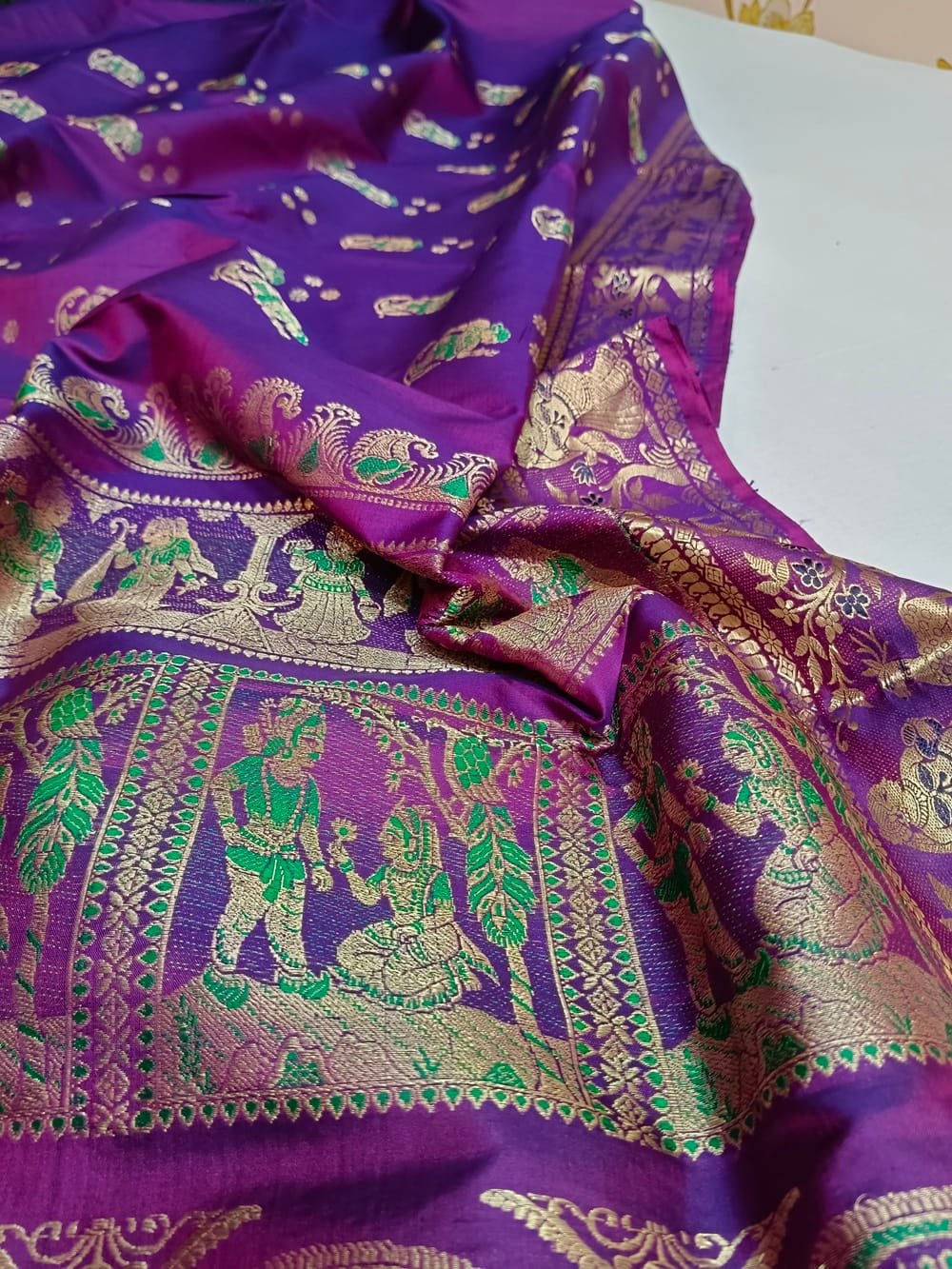
Traditionally associated with Bengal and today particularly renowned for the weaving tradition of Bishnupur in West Bengal, Baluchari sarees are recognisable for elaborate motifs woven into the body, border and especially the pallu.
Depending on the saree, these can include floral patterns, traditional figures, mythological scenes and narrative motifs.
This intricate construction means that careless handling can affect more than just the surface appearance.
Proper care helps protect:
- The silk fibres
- Woven motifs
- Pallu and border
- Zari work, when present
- Original colours
- Shape and drape of the saree
Think of preservation as preventive care rather than trying to repair damage after it occurs.
1. Never Store a Baluchari Saree Without Airing It
After attending a wedding, puja or other occasion, you may be tempted to fold the saree immediately and put it back into the wardrobe.
Avoid doing this.
The saree may have absorbed perspiration, body moisture or traces of perfume while being worn.
Instead, place it in a clean, dry and shaded area and allow it to air naturally before storing it.
Avoid strong direct sunlight, particularly for prolonged periods, because excessive light exposure can contribute to colour fading.
Once the saree is completely dry and aired, it can be folded for storage.
2. Should You Wash a Baluchari Saree at Home?
For valuable Baluchari silk sarees, professional dry cleaning is generally the safer option than experimenting with washing at home.
Water, detergent, rubbing and incorrect drying can potentially affect silk fibres, dyes, zari or the saree’s finish.
Avoid:
- Machine washing
- Regular laundry detergent
- Bleach
- Harsh stain removers
- Scrubbing
- Wringing or twisting
If your Baluchari has a stain, resist the urge to aggressively rub the affected area.
Take it to a professional cleaner experienced with silk and explain what caused the stain, if you know.
The earlier an appropriate professional can assess a serious stain, the better.
3. Always Make Sure the Saree Is Completely Dry Before Storage
Moisture is one of the biggest enemies of long-term textile storage.
Never store a Baluchari saree when it is even slightly damp.
A humid wardrobe combined with trapped moisture can create an environment where unpleasant odours, mildew or fabric deterioration become more likely.
Before storage, ensure that:
the saree is clean + fully dry + properly aired.
This simple rule can prevent many storage-related problems.
4. Use a Breathable Cotton or Muslin Cover
One of the most important answers to how to store a Baluchari saree is surprisingly simple: let the fabric breathe.
Instead of sealing your saree inside ordinary plastic for long-term storage, consider wrapping it in clean cotton or muslin or placing it inside a breathable fabric saree bag.
Breathable fabric helps protect the saree from dust while avoiding the completely sealed environment created by some plastic packaging.
For valuable silk sarees, individual storage is preferable to squeezing several heavy sarees tightly into one bag.
5. Change the Folds Periodically
This is one of the most useful Baluchari saree preservation habits.
A silk saree left folded along exactly the same lines for a very long period can develop persistent creases and stress along those folds.
Every few months, take your Baluchari saree out.
Allow it to air briefly in a shaded, dry place and refold it along slightly different lines before putting it back.
Pay particular attention to heavily woven sections and the pallu.
This takes only a few minutes but is useful for long-term saree preservation.
6. Don’t Stack Too Much Weight on Your Baluchari
Imagine placing ten or fifteen heavy sarees on top of one delicate Baluchari and leaving them untouched for a year.
That’s a lot of continuous pressure.
Try not to bury your most precious silk sarees beneath an extremely heavy stack.
Keep the storage area spacious enough that the saree isn’t excessively compressed.
If you own several premium sarees, organising them individually in breathable covers can make both storage and periodic inspection easier.
7. Protect the Saree From Moisture and Humidity
In humid climates, moisture management becomes particularly important.
Choose a wardrobe area that is:
- Clean
- Dry
- Away from damp walls
- Protected from water leakage
- Not exposed to extreme temperature changes
Check your sarees periodically, especially during humid or rainy seasons.
If the cupboard itself feels damp or smells musty, deal with the source of the moisture rather than simply adding fragrance to the wardrobe.
8. Be Careful With Perfume and Deodorant
Perfume may complete your look, but spraying it directly onto an expensive silk saree isn’t a good idea.
Perfumes, deodorants and other cosmetic products can contain alcohol, oils or other ingredients that may leave marks or affect delicate textiles.
Apply perfume to appropriate areas of your body before draping the saree, and allow it to dry.
Try to keep products such as:
- Perfume
- Deodorant
- Hairspray
- Makeup
- Body oil
away from direct contact with the silk wherever possible.
9. Keep the Saree Away From Direct Sunlight
A little indirect airing and hours of harsh sunlight are very different things.
For storage and routine airing, choose a shaded, well-ventilated location.
Repeated or prolonged exposure to strong sunlight can gradually fade textile colours.
This is particularly important when you want to preserve a Baluchari saree for many years.
10. Handle Jewellery Carefully
Baluchari sarees often accompany traditional jewellery, but sharp jewellery can become a problem.
Rings, bangles, bracelets or necklaces with sharp edges can snag silk threads or catch intricate woven motifs.
When dressing, handle the saree carefully around jewellery.
It may help to complete most of the draping before putting on pieces that are particularly likely to catch the fabric.
The same caution applies while removing the saree after an event.
11. Don’t Iron a Baluchari Saree Carelessly
Silk should not be treated like everyday cotton.
Excessive heat can damage delicate fabric, while direct ironing over zari or elaborate woven areas may affect their appearance.
If ironing is necessary, follow the garment’s care instructions and use an appropriate low-temperature setting suitable for silk.
A clean cotton cloth can also be placed between the iron and saree where appropriate.
For a particularly valuable Baluchari, professional pressing may be preferable.
12. What About Zari in Swarnachari or Meenakari Baluchari Sarees?
Some Baluchari varieties feature extensive zari or additional coloured woven details.
These richly decorated sarees deserve extra care.
Avoid moisture and chemical exposure, and don’t aggressively iron directly over metallic work.
When folding, avoid creating excessive pressure repeatedly along heavily woven sections.
If the saree has substantial zari, wrapping it carefully in clean muslin or cotton before storage is particularly useful.
13. How Often Should You Take a Baluchari Saree Out?
Don’t let a precious saree disappear into your wardrobe for five years.
A practical habit is to inspect and refold stored silk sarees every few months.
During this routine:
- Take the saree out carefully.
- Check for moisture, odour or visible damage.
- Air it in a shaded, dry location.
- Check the border, body and pallu.
- Refold it differently.
- Return it to its breathable cover.
This also gives you an opportunity to detect storage problems before they become serious.
Common Baluchari Saree Care Mistakes to Avoid
Even a premium saree can deteriorate when stored incorrectly.
Avoid these common mistakes:
- Keeping the saree in plastic for years
- Storing it while damp
- Machine washing
- Using harsh detergents or stain removers
- Spraying perfume directly on the fabric
- Leaving it in strong sunlight
- Never changing its folds
- Stacking excessive weight over it
- Using very high ironing temperatures
- Storing it against a damp wardrobe wall
- Pulling loose threads
- Allowing sharp jewellery to snag the weaving
Good preservation is mostly about avoiding unnecessary stress on the textile.
How to Preserve a Baluchari Saree for the Next Generation
Many silk sarees eventually become family keepsakes.
If you want your Baluchari to remain beautiful enough to pass on, create a simple routine:
Wear → Air → Professionally clean when necessary → Dry completely → Wrap in breathable fabric → Store carefully → Inspect and refold periodically.
Don’t wait until a special occasion to check the saree.
Long-term preservation depends much more on what happens between wears than what happens on the day you wear it.
Frequently Asked Questions
How should I store a Baluchari saree?
Store it clean and completely dry, preferably wrapped in clean cotton or muslin or inside a breathable fabric saree bag. Keep it in a dry, dark wardrobe and refold it periodically.
Can I wash a Baluchari saree at home?
For valuable silk Baluchari sarees, professional dry cleaning is generally safer. Always check the specific care instructions supplied with your saree.
Can Baluchari sarees be stored in plastic bags?
Plastic is not ideal for long-term storage of valuable silk sarees because it restricts breathability and can potentially trap moisture. Breathable cotton or muslin storage is generally preferable.
How often should I refold my Baluchari saree?
There is no universal fixed interval, but checking and changing the folds every few months is a useful long-term storage habit.
Can I spray perfume on a Baluchari saree?
It is better not to spray perfume, deodorant or hairspray directly onto silk. Apply personal fragrances before wearing the saree and allow them to dry.
How do I protect the zari of a Baluchari saree?
Keep it away from moisture, perfume and harsh chemicals. Avoid excessive rubbing, direct high heat and repeated pressure on heavily woven areas during storage.
Final Thoughts
Learning how to preserve a Baluchari saree is ultimately about respecting the craftsmanship behind it.
You don’t need to constantly clean or handle the saree. In fact, unnecessary handling can sometimes do more harm than good.
Keep it clean, dry, protected from harsh light, stored in breathable fabric and periodically refolded.
A Baluchari carries far more than beautiful motifs. Its intricate pallu and woven stories represent a remarkable textile tradition of Bengal.
Treat it carefully today, and years later, when you open that muslin cover and unfold the saree again, its beauty can still remind you why you chose it in the first place.