






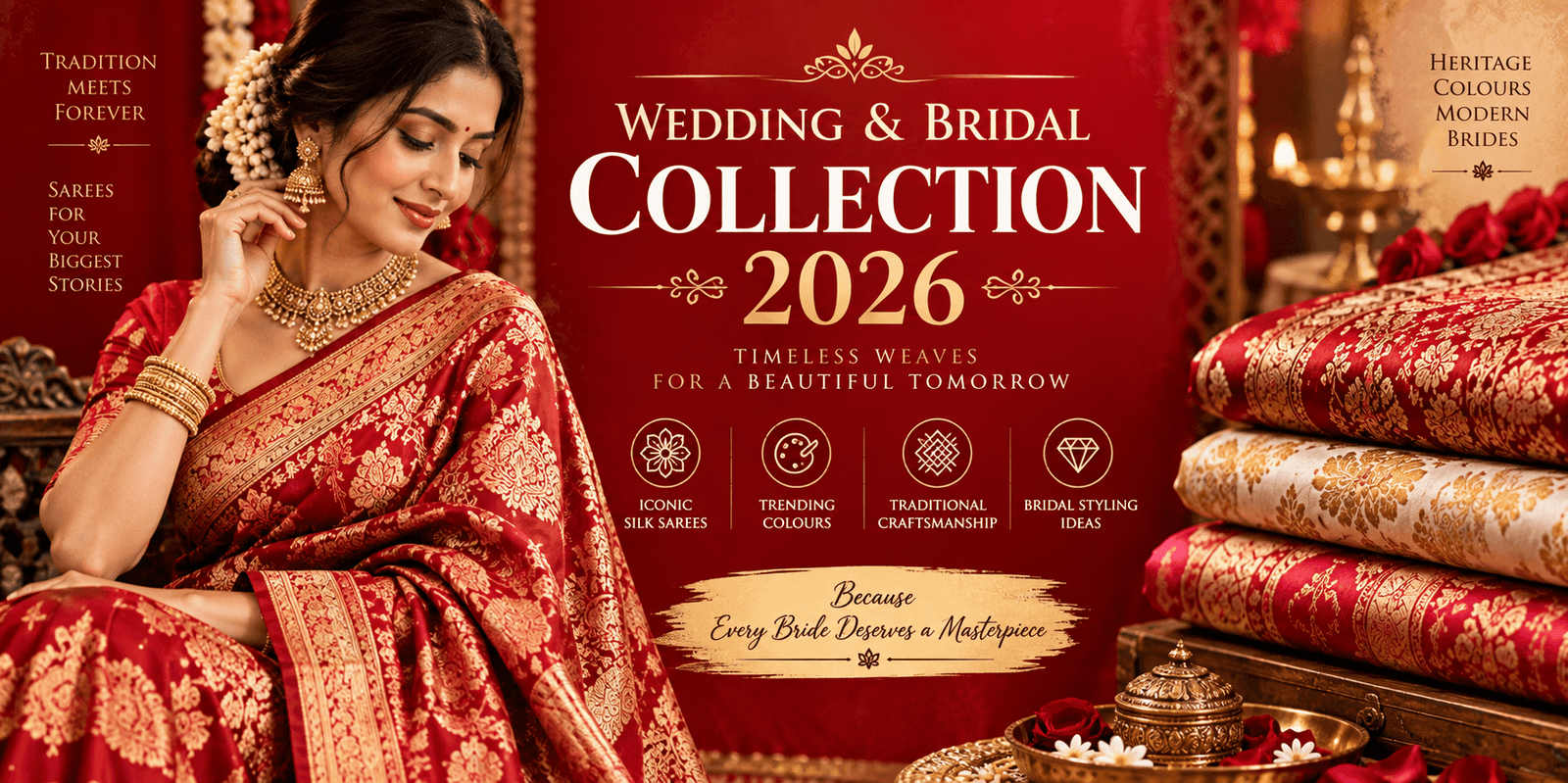
Wedding & Bridal Saree Collection 2026: Trends, Colours & Best Sarees for Brides
A bridal saree is rarely just another outfit.
It becomes part of the photographs, rituals and memories of one of life’s biggest celebrations — and in many families, that saree remains treasured long after the wedding day.
For Wedding and Bridal Saree Collection 2026, one trend stands above everything else: brides don’t have to choose between tradition and individuality anymore.
Heritage silks, grand zari and traditional weaving remain deeply relevant, while contemporary brides are experimenting with softer colours, unusual combinations, lighter drapes and statement blouses.
So, if you’re getting married in 2026 — or shopping for someone who is — here are the bridal saree trends, colours and Indian weaves worth exploring this wedding season.
Wedding & Bridal Saree Trends for 2026
Bridal fashion in 2026 is moving in two beautiful directions.
One celebrates heritage maximalism — deep reds, jewel tones, traditional silk, rich zari, grand pallus and statement borders.
The other embraces refined minimal luxury — ivory, champagne, pastel pink, sage, lavender and lighter fabrics with subtle metallic details.
Neither replaces the other.
Instead, today’s bride can choose according to her ceremony, personality, region and wedding setting.
That flexibility is perhaps the biggest bridal trend of 2026.
1. Banarasi Silk Sarees: The Bridal Classic That Never Disappears
If you imagine a grand North or East Indian bridal saree, chances are a Banarasi silk saree comes to mind.
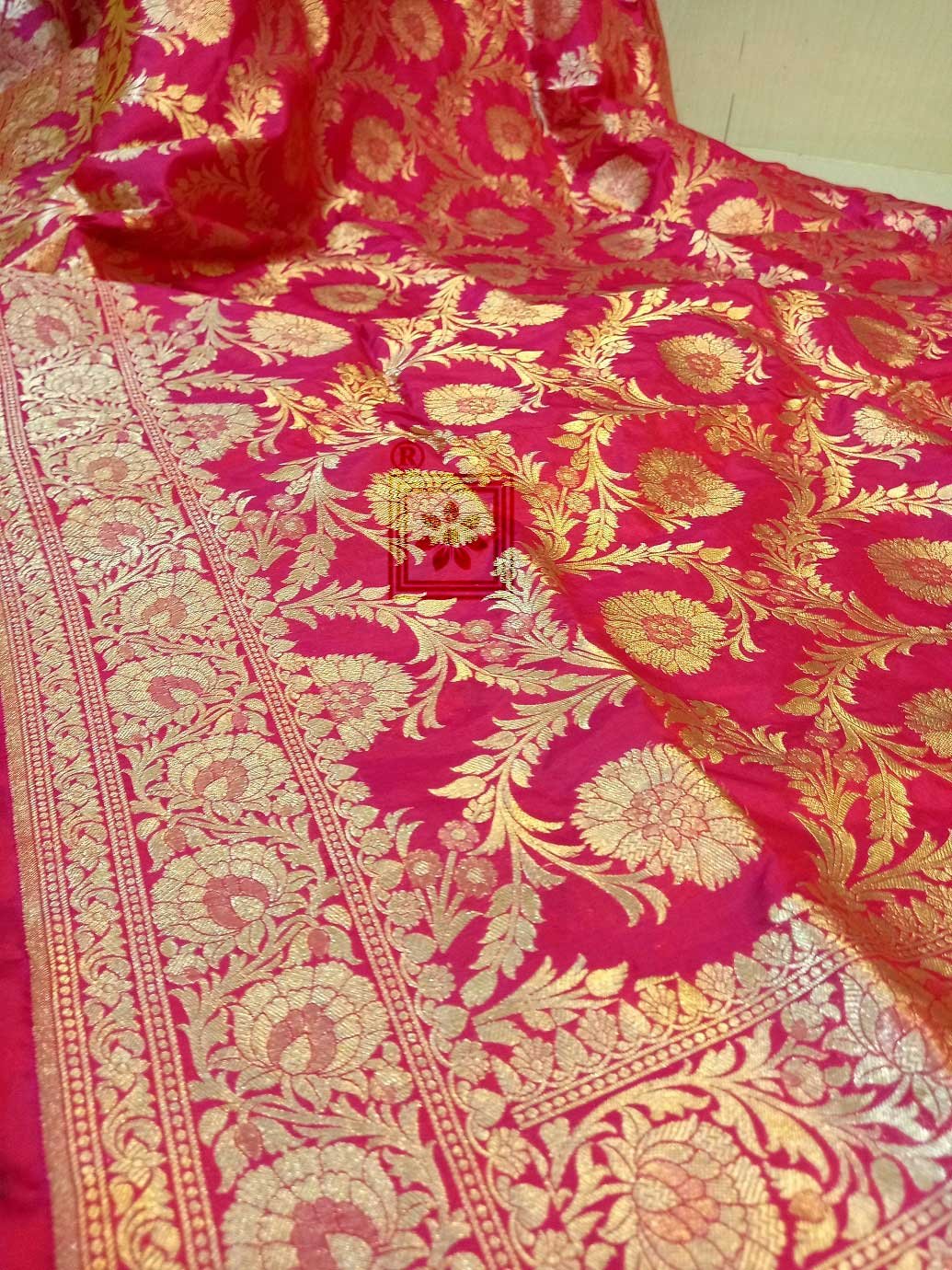
Banarasi sarees continue to hold a special position in bridal wardrobes because of their rich silk, intricate weaving and magnificent zari work.
For a traditional wedding ceremony, consider:
- Red or maroon Katan Banarasi
- Meenakari Banarasi
- Kadhua Banarasi
- Jangla designs
- Antique zari Banarasi
- Rich floral or traditional motifs
- Grand zari pallu and borders
But 2026 Banarasi styling doesn’t stop at red.
Ivory, champagne, blush pink and other softer shades are also being embraced, particularly for daytime and destination celebrations.
Best for:
Wedding ceremony, engagement, reception and bridal trousseau.
2. Kanjivaram Silk: Regal South Indian Bridal Luxury
Few sarees create bridal grandeur quite like a Kanjivaram or Kanjeevaram silk saree.
Rich silk, striking colour contrasts and traditional zari make Kanjivaram a natural choice for South Indian weddings — but its appeal now extends across India.
For 2026, traditional deep colours remain extremely relevant:
Maroon, red, emerald, bottle green, royal blue, purple and peacock-inspired shades can all create a magnificent bridal look.
The saree itself is already visually powerful, so it often pairs beautifully with traditional gold jewellery, temple jewellery, jasmine flowers and a carefully chosen blouse.
Best for:
Muhurtham, main wedding ceremony and traditional bridal looks.
3. Baluchari & Swarnachari: For the Bride Who Wants Her Saree to Tell a Story
A wedding is a story.
So why shouldn’t your saree tell one too?
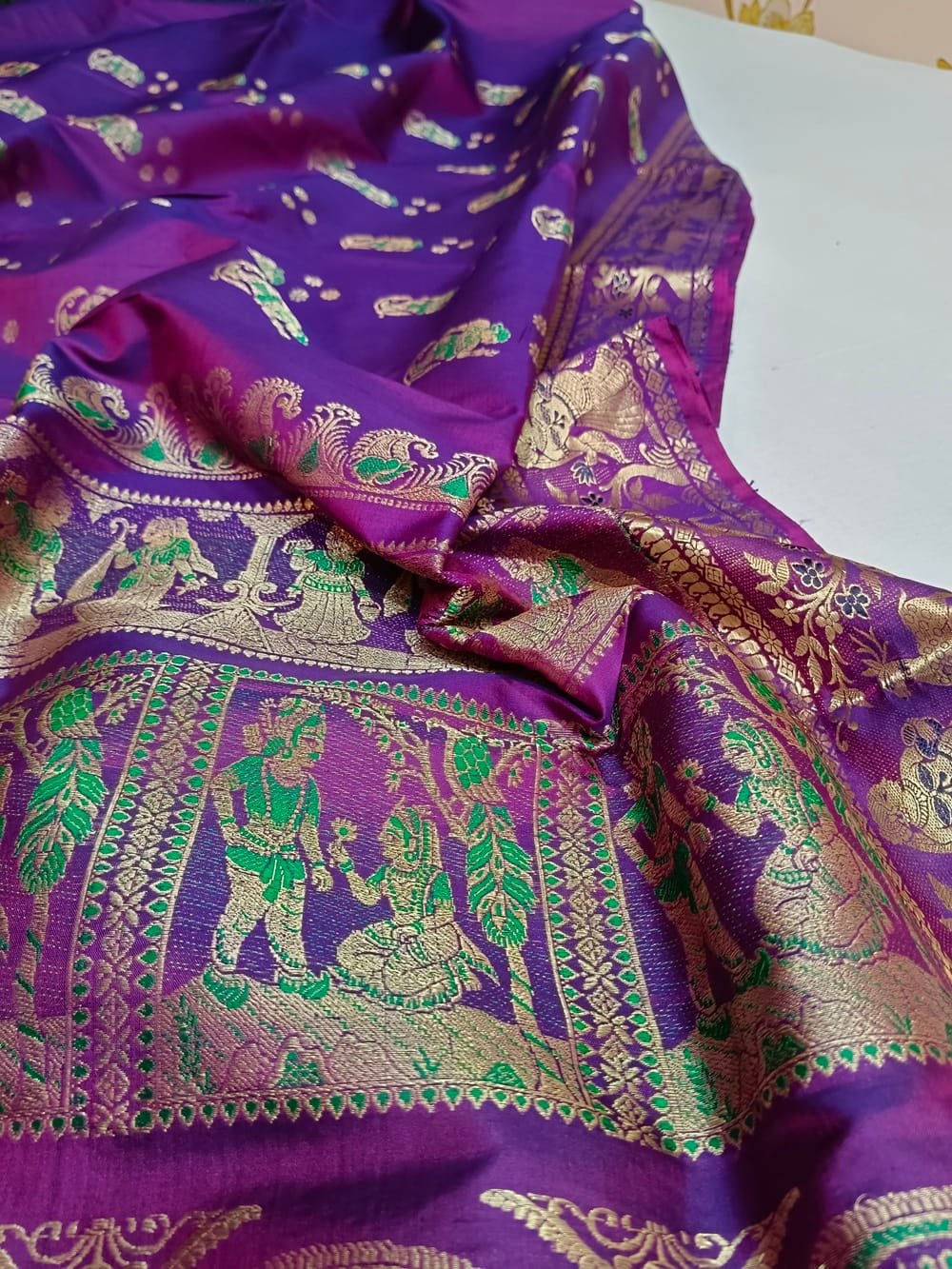
The distinctive beauty of a Bishnupur Baluchari saree lies in its woven narrative motifs, particularly across the pallu and border.
For greater bridal grandeur, Swarnachari introduces prominent metallic zari effects while retaining the storytelling character associated with Baluchari weaving.
These sarees are especially meaningful for Bengali brides or anyone who appreciates Indian textile heritage.
Instead of relying solely on surface embellishment, their beauty comes from the weaving itself.
Best for:
Bengali weddings, receptions, engagement ceremonies and heritage bridal wardrobes.
4. Tissue Silk: The 2026 Choice for Luminous Glamour
If traditional silk represents richness, Tissue silk represents light.
Its metallic, luminous surface can create an almost glowing appearance under wedding lighting.
Gold, champagne, silver-toned and pastel Tissue sarees are particularly suited to the current interest in understated luxury.
A Tissue saree paired with an elegant blouse and statement jewellery can look luxurious without requiring excessive embellishment.
This makes it an excellent option for brides who want something contemporary while still wearing a saree.
Best for:
Reception, cocktail evening, engagement and modern wedding events.
5. Gadwal Sarees: Tradition With a Graceful Drape
A beautiful Gadwal saree offers another option for brides who love South Indian textile traditions.
Known for the visual relationship between the body and contrasting border/pallu, Gadwal sarees can provide richness while remaining elegant.
Traditional combinations featuring red, green, maroon, mustard and contrasting zari borders work beautifully for wedding ceremonies.
Best for:
Pre-wedding rituals, traditional ceremonies, engagement and wedding guests.
6. Kora and Organza Banarasi: For Daytime & Destination Weddings
Not every bride wants a very heavy saree for every function.
That is where Kora and Organza Banarasi sarees become interesting.
Their lighter, more translucent character works particularly well with delicate zari, floral weaving and softer colours.
Think:
Blush pink.
Sage green.
Ivory.
Powder blue.
Peach.
Lavender.
Champagne.
These shades can photograph beautifully in natural daylight and work particularly well for garden, summer and destination ceremonies.
Best for:
Engagement, daytime wedding, mehendi, bridal brunch and destination wedding.
7. Traditional Red Is Still Bridal Royalty
Fashion changes. Bridal red survives.
Current 2026 colour coverage still shows traditional red holding its place, although many brides are exploring richer variations such as crimson, burgundy, wine and deep maroon.
Why?
Because red with gold zari creates an unmistakably bridal visual language.
A red Banarasi Katan or traditional silk saree doesn’t need to chase trends. The combination already carries generations of wedding associations.
For brides who want photographs that still feel bridal decades later, classic red remains difficult to beat.
8. Jewel Tones Are Making Weddings Richer
For brides who don’t want red but still want drama, jewel tones are one of the strongest directions for 2026.
Consider:
- Emerald green
- Deep teal
- Royal blue
- Burgundy
- Wine
- Rich purple
- Rani pink
These colours work particularly beautifully with gold zari and are especially effective for evening ceremonies and receptions.
Under warm wedding lighting, the combination of deep silk colour and metallic zari can create extraordinary depth.
9. Ivory, Gold & Champagne for Quiet Luxury
At the opposite end of the bridal spectrum sits another important 2026 aesthetic: quiet luxury.
Ivory, off-white, muted gold and champagne create an elegant alternative to heavily saturated bridal colours.
The key is texture.
Instead of relying on bright colour, the saree can use:
- Fine zari
- Woven motifs
- Metallic borders
- Tissue effects
- Intricate craftsmanship
The result feels sophisticated rather than plain.
For brides who believe “less, but exceptional” describes their style, this palette deserves attention.
10. Pastels Haven’t Disappeared — They’ve Become More Bridal
Pastels remain important for daytime celebrations.
But instead of extremely simple pastel sarees, the bridal interpretation often combines soft colour with richer detailing.
Blush pink with gold.
Sage with metallic zari.
Lavender with silver-toned details.
Powder blue with an elegant woven border.
Peach with antique gold.
Current bridal coverage particularly highlights lilac, ivory/muted gold and sage-based palettes alongside the continuing strength of jewel tones and traditional red.
The idea is to keep the colour delicate while allowing the craftsmanship to make the saree wedding-worthy.
Choosing a Bridal Saree for Each Wedding Function
One of the smartest ways to build a 2026 bridal collection is not to buy five similar heavy sarees.
Give each ceremony a different personality.
Engagement
Try Tissue, Organza Banarasi, pastel Kora or an elegant silk saree.
Haldi
Mustard, yellow, saffron, ivory-yellow combinations or lighter handloom sarees work beautifully.
Mehendi
Green, teal, floral, artistic or lighter silk sarees allow more freedom and movement.
Main Wedding
This is where a grand Banarasi Katan, Kanjivaram, Swarnachari or another traditional bridal silk can take centre stage.
Reception
Experiment with Tissue, metallic tones, jewel colours, intricate Baluchari/Swarnachari or a statement Banarasi.
The result is a bridal wardrobe where every saree has its own identity.
The Blouse Is Becoming a Statement in 2026
Don’t choose the saree and treat the blouse as an afterthought.
Blouse design is increasingly becoming a focal point in 2026 wedding fashion.
Contemporary bridal styling is experimenting with structured silhouettes, corset-inspired forms, interesting necklines and cape-style elements alongside traditional blouse designs.
But the blouse should still respect the saree.
For an intricate heritage saree, sometimes a beautifully fitted, relatively simple blouse allows the weaving to remain the hero.
For a minimalist Tissue or Organza saree, the blouse can carry more of the drama.
Don’t Buy a Bridal Saree Based on Trend Alone
Your wedding photographs will remain long after the 2026 trend cycle ends.
Before buying, ask yourself:
Does this saree feel like me?
Then consider:
- Wedding tradition and rituals
- Time of ceremony
- Venue and lighting
- Climate
- Comfort
- Jewellery
- Blouse possibilities
- Fabric quality
- Craftsmanship
- Whether you would treasure or wear it again
The best bridal saree should look extraordinary today without feeling meaningless tomorrow.
Pure Silk & Silk Mark: What Bridal Buyers Should Know
A bridal silk saree can be a significant purchase, so don’t evaluate it only from photographs.
Ask about:
- Fabric composition
- Weaving technique
- Zari details
- Place or tradition of weaving
- Blouse piece
- Care instructions
- Authenticity information
When purchasing products sold as pure silk, Silk Mark certification/tagging where applicable provides additional assurance regarding silk purity.
For a saree intended to become part of your long-term wardrobe, understanding what you’re buying matters just as much as choosing the colour.
Bridal Saree Shopping Online: 5 Things to Check
Online bridal shopping offers far more choice, but premium purchases deserve careful consideration.
Before ordering, check:
Detailed photographs: Zoom into body, border and pallu.
Product description: Understand fabric and weaving details.
Colour information: Screens can display shades differently.
Seller credibility: Buy premium silk from a seller that clearly describes its products.
Exchange and shipping policies: Particularly important when ordering for a fixed wedding date.
Don’t leave your most important wedding saree purchase until the last moment.
Frequently Asked Questions
Which sarees are trending for brides in 2026?
Banarasi and Kanjivaram remain major traditional choices, while Tissue, Organza/Kora, Baluchari/Swarnachari and other heritage silk sarees offer alternatives for different wedding functions. Current trends combine traditional craftsmanship with modern colours and styling.
What are the trending bridal saree colours for 2026?
Traditional red remains important, alongside maroon, burgundy and jewel tones such as emerald and deep blue. Ivory, muted gold, champagne, lilac, sage and other pastels are also prominent, especially for daytime weddings.
Which saree is best for a Bengali bride?
Banarasi remains a classic Bengali bridal choice, while Baluchari and Swarnachari can add a distinctly Bengal-focused heritage element to the wider wedding wardrobe.
Which bridal saree is suitable for a South Indian wedding?
Kanjivaram is among the most iconic options, while Gadwal and other South Indian silk traditions can be considered for different ceremonies.
What saree works well for a modern reception?
Tissue silk, metallic-toned sarees, jewel-tone Banarasi, Swarnachari and elegant contemporary silk sarees can all create striking reception looks.
Wedding Sarees in 2026: Tradition, But Make It Personal
The most exciting thing about the Wedding & Bridal Saree Collection 2026 isn’t a particular colour or fabric.
It’s freedom.
A bride can wear deep red Katan Banarasi for the wedding and champagne Tissue for the reception.
She can choose a magnificent Kanjivaram because it connects her to family tradition.
She can wear a Baluchari because she loves the stories woven into its pallu.
Or she can choose an ivory saree simply because it feels most like her.
The saree doesn’t have to choose between heritage and modernity.
Indian handloom has been evolving for generations.
The 2026 bride is simply writing the next chapter.
So choose craftsmanship. Choose quality. Choose a colour that makes you feel extraordinary.
And most importantly, choose a bridal saree you will still want to unfold, admire and remember many years after the wedding is over.